


Topics
Single Briefing
List of Briefings
Core Briefings6
Objections17
Animals and Exploitation9
Philosophy and Society1
Environment2
Human Health6
Advocacy5
Briefing List
-
Veganism 101: An Introduction
This briefing provides an overview of veganism, the history of vegan thinking, and reasons to consider veganism.
Briefing Meta
Counts:
Main Text Key Points 8 Counterclaims 1 Supplementary 2 Further Study 6 Footnotes 149 Media & Advocacy Advocacy Notes 13 —Socratic Questions 19 Flashcards 148 Presentation Slides 62 Memes & Infographics 2 Companion Videos 1 Activity Log:

-
Getting Started with Going Vegan
This briefing provides a few practical suggestions for getting started with going vegan, as well as links to resources that can help.
Briefing Meta
Counts:
Main Text Key Suggestions 13 Counterclaims 1 Supplementary 3 Further Study 2 Footnotes 4 Media & Advocacy Advocacy Notes 11 —Socratic Questions 15 Flashcards 40 Presentation Slides 0 Memes & Infographics 0 Companion Videos 0 Activity Log:

-
Animal Agriculture: Cruel and Unjust
This briefing highlights the widespread injustices and severe suffering caused by using animals for food.
Briefing Meta
Counts:
Main Text Key Points 6 Counterclaims 1 Supplementary 1 Further Study 3 Footnotes 76 Media & Advocacy Advocacy Notes 16 —Socratic Questions 22 Flashcards 0 Presentation Slides 0 Memes & Infographics 0 Companion Videos 2 Activity Log:
-
A Vegan Diet Supports Good Health and Reduces Chronic Disease Risk
There is agreement among the credentialed dietetic and medical communities that we do not need animal products to be healthy, and that vegan diets can be health-promoting and protective against chronic diseases.
Briefing Meta
Counts:
Main Text Key Points 5 Counterclaims 2 Supplementary 2 Further Study 4 Footnotes 43 Media & Advocacy Advocacy Notes 10 —Socratic Questions 9 Flashcards 53 Presentation Slides 0 Memes & Infographics 0 Companion Videos 0 Activity Log:

-
The Environmental Impact of Animal Agriculture
An overview of the devastating impacts of animal agriculture on the environment.
Briefing Meta
Counts:
Main Text Key Points 6 Counterclaims 1 Supplementary 1 Further Study 3 Footnotes 55 Media & Advocacy Advocacy Notes 8 —Socratic Questions 13 Flashcards 77 Presentation Slides 0 Memes & Infographics 0 Companion Videos 0 Activity Log:

-
Can Veganism Mitigate World Hunger and Starvation?
A plant-based food economy will promote a more efficient food production system better capable of feeding the world.
Briefing Meta
Counts:
Main Text Key Points 5 Counterclaims 5 Supplementary 2 Further Study 5 Footnotes 45 Media & Advocacy Advocacy Notes 10 —Socratic Questions 9 Flashcards 61 Presentation Slides 0 Memes & Infographics 4 Companion Videos 1 Activity Log:

-
“Vegans Kill More Because of Crop Deaths”
This briefing explains why using crop deaths as an argument against veganism doesn’t hold up.
Briefing Meta
Counts:
Main Text Key Points 5 Counterclaims 1 Supplementary 2 Further Study 5 Footnotes 25 Media & Advocacy Advocacy Notes 9 —Socratic Questions 8 Flashcards 61 Presentation Slides 0 Memes & Infographics 0 Companion Videos 0 Activity Log:
-
“Plants Are Sentient and Have Feelings Too”
This briefing provides several reasons why objections to veganism based on plant sentience or plant pain are unfounded.
Briefing Meta
Counts:
Main Text Key Points 6 Counterclaims 2 Supplementary 2 Further Study 4 Footnotes 17 Media & Advocacy Advocacy Notes 7 —Socratic Questions 15 Flashcards 33 Presentation Slides 0 Memes & Infographics 0 Companion Videos 0 Activity Log:

-
Plant Protein: Abundant, Complete, and Healthier
This briefing shows that plant protein is sufficient, complete, and avoids the risks associated with animal protein.
Briefing Meta
Counts:
Main Text Key Points 8 Counterclaims 1 Supplementary 3 Further Study 5 Footnotes 29 Media & Advocacy Advocacy Notes 13 —Socratic Questions 22 Flashcards 54 Presentation Slides 0 Memes & Infographics 0 Companion Videos 0 Activity Log:
-
Nature-Based Objections to Veganism
We examine several nature-based objections to veganism, including “circle of life,” “apex predation,” “animals eat animals,” etc.
Briefing Meta
Counts:
Main Text Key Points 8 Counterclaims 0 Supplementary 1 Further Study 3 Footnotes 10 Media & Advocacy Advocacy Notes 12 —Socratic Questions 20 Flashcards 0 Presentation Slides 0 Memes & Infographics 0 Companion Videos 0 Activity Log:

-
The Rights-Based Approach to Animal Ethics
This briefing summarizes the key concepts of animal rights philosophy as espoused by philosopher Tom Regan.
Briefing Meta
Counts:
Main Text Key Concepts 5 Counterclaims 1 Supplementary 2 Further Study 5 Footnotes 16 Media & Advocacy Advocacy Notes 10 —Socratic Questions 14 Flashcards 22 Presentation Slides 0 Memes & Infographics 0 Companion Videos 0 Activity Log:

-
“Humans Are Omnivores with Canine Teeth and Front-Facing Eyes”
This briefing shows why veganism’s validity isn’t tied to humans being omnivorous, having canine teeth, or front-facing eyes.
Briefing Meta
Counts:
Main Text Key Points 7 Counterclaims 0 Supplementary 1 Further Study 3 Footnotes 23 Media & Advocacy Advocacy Notes 12 —Socratic Questions 19 Flashcards 32 Presentation Slides 0 Memes & Infographics 0 Companion Videos 0 Activity Log:

-
“It’s My Personal Choice, So Respect It”
In answering this objection to veganism, we show how personal choice cannot be used to justify actions that are unethical.
Briefing Meta
Counts:
Main Text Key Points 5 Counterclaims 1 Supplementary 1 Further Study 3 Footnotes 3 Media & Advocacy Advocacy Notes 9 —Socratic Questions 15 Flashcards 19 Presentation Slides 0 Memes & Infographics 0 Companion Videos 0 Activity Log:

-
Using Almonds’ Environmental Impact as a Distraction from Veganism
This briefing examines why using the environmental impact of almond production to distract from veganism is both logically flawed and environmentally unsound.
Briefing Meta
Counts:
Main Text Key Points 3 Counterclaims 0 Supplementary 5 Further Study 2 Footnotes 8 Media & Advocacy Advocacy Notes 9 —Socratic Questions 17 Flashcards 25 Presentation Slides 0 Memes & Infographics 0 Companion Videos 0 Activity Log:

-
“Veganism Would Devastate the Economy and Cause Job Loss”
This briefing shows that a transition to plant-based food systems can be managed effectively and may yield significant economic and societal benefits.
Briefing Meta
Counts:
Main Text Key Points 6 Counterclaims 0 Supplementary 1 Further Study 1 Footnotes 24 Media & Advocacy Advocacy Notes 9 —Socratic Questions 9 Flashcards 0 Presentation Slides 0 Memes & Infographics 0 Companion Videos 0 Activity Log:

-
“Eating Vegan Is Too Expensive”
We examine the claim that eating vegan is too expensive and out of reach for many people.
Briefing Meta
Counts:
Main Text Key Points 5 Counterclaims 0 Supplementary 5 Further Study 1 Footnotes 7 Media & Advocacy Advocacy Notes 11 —Socratic Questions 20 Flashcards 0 Presentation Slides 0 Memes & Infographics 0 Companion Videos 0 Activity Log:

-
“The Christian God Condones Eating Animals”
We address the objection to veganism that the Christian God condones the harmful exploitation of animals and even put them here for our use.
Briefing Meta
Counts:
Main Text Key Points 7 Counterclaims 0 Supplementary 2 Further Study 6 Footnotes 10 Media & Advocacy Advocacy Notes 8 —Socratic Questions 10 Flashcards 0 Presentation Slides 0 Memes & Infographics 0 Companion Videos 0 Activity Log:

-
“Humans Have Souls; Animals Don’t”
Several points to consider when evaluating the objection to veganism and animal rights based on the presence or absence of a soul.
Briefing Meta
Counts:
Main Text Key Points 3 Counterclaims 1 Supplementary 2 Further Study 4 Footnotes 8 Media & Advocacy Advocacy Notes 7 —Socratic Questions 10 Flashcards 27 Presentation Slides 0 Memes & Infographics 0 Companion Videos 0 Activity Log:

-
“A Vegan Diet Is Not for Everyone; It Made Me Sick”
We provide possible reasons for why you may not be feeling well on your vegan diet.
Briefing Meta
Counts:
Main Text Key Points 11 Counterclaims 0 Supplementary 0 Further Study 2 Footnotes 9 Media & Advocacy Advocacy Notes 12 —Socratic Questions 18 Flashcards 0 Presentation Slides 0 Memes & Infographics 0 Companion Videos 0 Activity Log:

-
“It’s Our Tradition, Culture, and Way of Living”
Several points to consider regarding the “tradition and culture” objection to veganism and animal rights.
Briefing Meta
Counts:
Main Text Key Points 4 Counterclaims 0 Supplementary 2 Further Study 6 Footnotes 3 Media & Advocacy Advocacy Notes 12 —Socratic Questions 20 Flashcards 0 Presentation Slides 0 Memes & Infographics 0 Companion Videos 0 Activity Log:

-
Vitamin B12 Information for Vegans
We address several aspects of Vitamin B12 for those on a vegan diet, including cost, supplementation, and the claim that B12 proves a vegan diet is not natural.
Briefing Meta
Counts:
Main Text Key Points 6 Counterclaims 1 Supplementary 4 Further Study 2 Footnotes 26 Media & Advocacy Advocacy Notes 7 —Socratic Questions 7 Flashcards 0 Presentation Slides 0 Memes & Infographics 0 Companion Videos 0 Activity Log:

-
“One Person is Powerless to Make a Difference”
This briefing explains, with six key points, why one person can make a difference.
Briefing Meta
Counts:
Main Text Key Points 7 Counterclaims 2 Supplementary 1 Further Study 1 Footnotes 5 Media & Advocacy Advocacy Notes 9 —Socratic Questions 12 Flashcards 25 Presentation Slides 0 Memes & Infographics 0 Companion Videos 0 Activity Log:

-
“We Give Animals Life, Meaning, and Protection; They Should Be Grateful”
This briefing addresses common rationalizations for exploiting animals involving life, meaning, protection, and gratitude.
Briefing Meta
Counts:
Main Text Key Points 5 Counterclaims 0 Supplementary 2 Further Study 4 Footnotes 3 Media & Advocacy Advocacy Notes 9 —Socratic Questions 15 Flashcards 20 Presentation Slides 0 Memes & Infographics 0 Companion Videos 0 Activity Log:
-
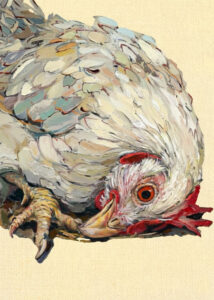
Chicken Injustices and Suffering
We catalog the breadth and severity of the suffering and injustices chickens are forced to endure at the hands of humans and also include slaughter counts and ages at slaughter.
Briefing Meta
Counts:
Main Text Key Points 10 Counterclaims 1 Supplementary 6 Further Study 7 Footnotes 59 Media & Advocacy Advocacy Notes 11 —Socratic Questions 20 Flashcards 0 Presentation Slides 0 Memes & Infographics 0 Companion Videos 0 Activity Log:
-
Chicken Sentience and Cognition
Chickens are sentient, are capable of complex mental processes, and lead rich cognitive, emotional, and psychological lives.
Briefing Meta
Counts:
Main Text Key Points 2 Counterclaims 1 Supplementary 1 Further Study 8 Footnotes 10 Media & Advocacy Advocacy Notes 12 —Socratic Questions 20 Flashcards 0 Presentation Slides 0 Memes & Infographics 0 Companion Videos 0 Activity Log:

-
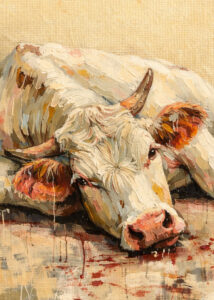
Cow Injustices and Suffering
We catalog the breadth and severity of the suffering and injustices farmed cows are forced to endure at the hands of humans and provide slaughter counts and slaughter age information.
Briefing Meta
Counts:
Main Text Key Points 11 Counterclaims 1 Supplementary 6 Further Study 4 Footnotes 115 Media & Advocacy Advocacy Notes 13 —Socratic Questions 17 Flashcards 0 Presentation Slides 0 Memes & Infographics 0 Companion Videos 0 Activity Log:
-
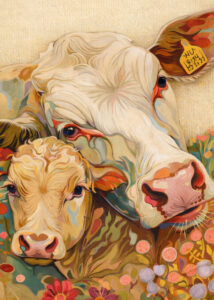
Cow Sentience and Cognition
Cows are sentient, capable of complex mental processes, and lead rich cognitive, emotional, and psychological lives.
Briefing Meta
Counts:
Main Text Key Points 6 Counterclaims 0 Supplementary 0 Further Study 7 Footnotes 11 Media & Advocacy Advocacy Notes 15 —Socratic Questions 19 Flashcards 0 Presentation Slides 0 Memes & Infographics 0 Companion Videos 0 Activity Log:
-
Diabetes and the Vegan Diet
For some individuals, a vegan diet can mitigate and possibly eliminate diabetes.
Briefing Meta
Counts:
Main Text Key Points 6 Counterclaims 1 Supplementary 4 Further Study 3 Footnotes 19 Media & Advocacy Advocacy Notes 5 —Socratic Questions 6 Flashcards 23 Presentation Slides 0 Memes & Infographics 0 Companion Videos 0 Activity Log:

-
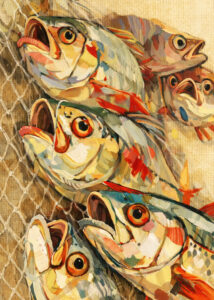
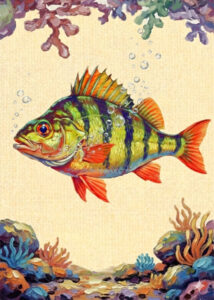
Fish Injustices and Suffering
This briefing catalogs the breadth and severity of the suffering and injustices fish undergo at the hands of humans and also provide slaughter counts.
Briefing Meta
Counts:
Main Text Key Injustices 8 Counterclaims 0 Supplementary 3 Further Study 5 Footnotes 35 Media & Advocacy Advocacy Notes 11 —Socratic Questions 18 Flashcards 0 Presentation Slides 0 Memes & Infographics 0 Companion Videos 0 Activity Log:
-
Fish Sentience and Cognition
This briefing provides scientific evidence that fish feel pain, are sentient, and lead rich cognitive, emotional, and psychological lives. It also includes slaughter counts.
Briefing Meta
Counts:
Main Text Key Points 6 Counterclaims 1 Supplementary 1 Further Study 5 Footnotes 25 Media & Advocacy Advocacy Notes 13 —Socratic Questions 18 Flashcards 39 Presentation Slides 0 Memes & Infographics 0 Companion Videos 0 Activity Log:
-
Pig Injustices and Suffering
We address the breadth and severity of the suffering and injustices pigs are forced to endure at the hands of humans and also include slaughter counts and slaughter age.
Briefing Meta
Counts:
Main Text Key Points 9 Counterclaims 2 Supplementary 6 Further Study 2 Footnotes 81 Media & Advocacy Advocacy Notes 13 —Socratic Questions 18 Flashcards 0 Presentation Slides 0 Memes & Infographics 0 Companion Videos 0 Activity Log:

-
Pig Sentience and Cognition
Pigs are sentient, capable of complex mental processes, and lead rich cognitive, emotional, and psychological lives.
Briefing Meta
Counts:
Main Text Key Points 7 Counterclaims 2 Supplementary 4 Further Study 6 Footnotes 20 Media & Advocacy Advocacy Notes 13 —Socratic Questions 20 Flashcards 0 Presentation Slides 0 Memes & Infographics 0 Companion Videos 0 Activity Log:

-
A Guide to Using the vBriefings Platform
This briefing provides tips for navigating the vBriefings platform and making effective use of its briefings, flashcards, outreach tools, and other materials.
Briefing Meta
Counts:
Main Text Key Tips 8 Counterclaims 0 Supplementary 0 Further Study 0 Footnotes 0 Media & Advocacy Advocacy Notes 0 —Socratic Questions 0 Flashcards 0 Presentation Slides 0 Memes & Infographics 0 Companion Videos 0 Activity Log:

-
Effective Conversations About Veganism and Animal Ethics
This briefing provides tactics and practical suggestions for engaging with others in conversations about veganism and animal ethics in a way that inspires action.
Briefing Meta
Counts:
Main Text Key Tactics 25 Counterclaims 0 Supplementary 9 Further Study 11 Footnotes 3 Media & Advocacy Advocacy Notes 0 —Socratic Questions 0 Flashcards 0 Presentation Slides 0 Memes & Infographics 0 Companion Videos 0 Activity Log:

-
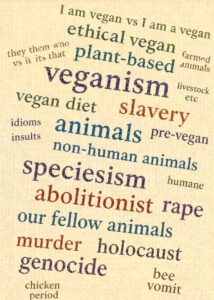
Words of Concern in Vegan and Animal Advocacy
This briefing provides practical guidelines for using certain often‑discussed and frequently debated words and terms of concern.
Briefing Meta
Counts:
Main Text Key Guidelines 8 Counterclaims 0 Supplementary 2 Further Study 1 Footnotes 6 Media & Advocacy Advocacy Notes 0 —Socratic Questions 0 Flashcards 0 Presentation Slides 0 Memes & Infographics 0 Companion Videos 0 Activity Log:
-
Outreach Cards: Why They Work and How to Get and Use Them
This briefing explains how to get and use outreach cards as personalized follow-up tools in vegan and animal rights conversations.
Briefing Meta
Counts:
Main Text Key Suggestions 4 Counterclaims 0 Supplementary 2 Further Study 1 Footnotes 0 Media & Advocacy Advocacy Notes 0 —Socratic Questions 0 Flashcards 0 Presentation Slides 0 Memes & Infographics 0 Companion Videos 0 Activity Log:

-
Building Rapport in Advocacy and Outreach
This briefing shows how rapport building is especially important for animal rights and vegan advocacy and why it helps. It provides specific techniques to build rapport and discusses how it applies in various settings.
Briefing Meta
Counts:
Main Text Key Points 4 Counterclaims 1 Supplementary 4 Further Study 3 Footnotes 20 Media & Advocacy Advocacy Notes 1 —Socratic Questions 0 Flashcards 49 Presentation Slides 0 Memes & Infographics 0 Companion Videos 0 Activity Log: